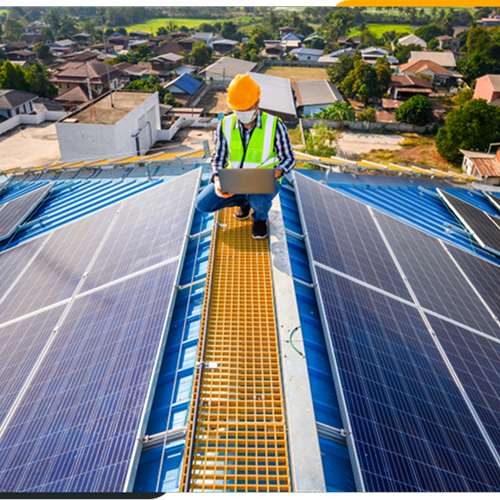
Rooftop solar is transforming the way energy is generated and consumed by bringing power production closer to where it is actually used. Instead of depending entirely on external electricity supply, rooftop systems allow users to generate their own energy directly from available roof space.
But the real question is— are you fully utilizing your rooftop, or letting a valuable energy asset remain unused?
A well-designed rooftop solar system not only reduces electricity costs but also provides long-term stability against rising tariffs. It enables users to take control of their energy consumption while contributing to a more sustainable and efficient power ecosystem.
With growing policy support and initiatives like PM Surya Ghar Yojana, rooftop solar has become more accessible and financially viable across different user segments.
Solar for Homes
For residential users, electricity is a recurring expense that continues to increase over time. Rooftop solar offers a practical way to reduce this burden by generating clean energy directly at home.
A properly designed system allows households to meet a significant portion of their daily energy needs while lowering dependence on grid electricity. Over time, this results in consistent savings, improved energy reliability, and greater control over consumption.
Rooftop solar also supports long-term financial planning by converting monthly electricity expenses into a stable and predictable investment.
Solar for office
Office spaces typically operate during daytime hours, which aligns well with solar energy generation. This allows businesses to utilize solar power efficiently, reducing operational costs while improving overall energy management and cost predictability.
Solar for Commercial Buildings
Commercial buildings often have high and continuous energy requirements. Rooftop solar helps offset a significant portion of this demand, resulting in lower electricity costs and improved long-term financial stability, while also enhancing sustainability.
Rooftop solar further adds value by improving the overall sustainability of the property, making it more aligned with modern energy standards and expectations.
Solar for Housing Societies
Housing societies represent a collective energy consumption model where common areas, facilities, and shared infrastructure require a continuous power supply.
Rooftop solar systems can be designed to support these shared energy needs, reducing the overall electricity cost for residents. By distributing the benefits across multiple households, societies can achieve significant savings while promoting sustainable living